Saudi Arabia Makes Nusuk Meal Vouchers Mandatory for Umrah Pilgrims
 By abdullah
Published: 19 Jul 2026
3 min read
By abdullah
Published: 19 Jul 2026
3 min read
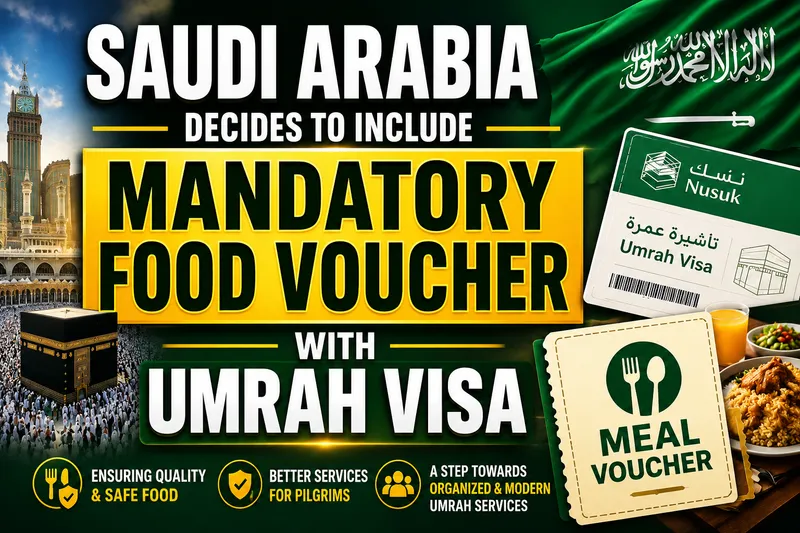
ISLAMABAD (special crosspondent) – The government of Saudi Arabia has announced a significant policy update concerning religious tourism, mandating the inclusion of a Nusuk Meal Voucher within the standard Umrah visa package. This strategic initiative is designed to guarantee access to hygienic, high-quality meals while standardizing food services for international visitors, ultimately enhancing the spiritual journey of pilgrims.
Implementation and Financial Structure
According to official reports, this new regulatory framework is scheduled to take effect from 1 Rabi’ al-Awwal 1448 AH. Under this system, a charge of SAR 20 per day will be levied on every Umrah pilgrim to cover the costs of the mandatory meal voucher. To streamline the administrative process, this amount will be integrated directly into the broader Umrah visa fee structure, ensuring that payment remains both transparent and convenient for applicants.
Pilot Phase and Regional Focus
Saudi authorities have confirmed that the policy will initially be launched as a pilot program targeting pilgrims originating from Pakistan, India, Bangladesh, and Egypt. Officials indicated that following a comprehensive evaluation of the scheme’s efficacy during this initial phase, the government plans to scale the initiative to include other nations. This approach mirrors the Kingdom’s broader commitment to digital reform, often discussed in regional diplomatic circles alongside initiatives such as Pakistan Invites Chinese Investment to Boost Meat Export Capacity to enhance service standards.
Ensuring Quality and Food Security
Under the new arrangement, pilgrims will be authorized to redeem their digital meal vouchers at a network of pre-approved restaurants and certified food service providers linked via the Nusuk platform. Saudi officials believe this centralization will significantly improve food safety, curb the distribution of substandard catering, and effectively manage logistics during peak seasons. While industry analysts anticipate that this policy may cause a marginal increase in the aggregate price of Umrah packages, they argue that the cost is justified by the provision of standardized, reliable, and hygienic food services.
Strategic Alignment with Vision 2030
The introduction of the mandatory voucher system represents a core component of the Kingdom’s Vision 2030 strategy, which aims to modernize the entire Hajj and Umrah ecosystem. By leveraging the digital infrastructure of the Nusuk platform—which currently facilitates online permits and integrated travel bookings—Saudi Arabia continues to prioritize the integration of smart services. These efforts, similar to the technological advancements seen in Pakistan and Japan Strengthen Strategic Cooperation in AI and Startups, demonstrate the Kingdom’s commitment to creating a world-class environment for millions of pilgrims visiting the holy cities annually.