Pakistan’s 28th Constitutional Amendment: Political Activity Intensifies Amid Backchannel Talks and Parliamentary Calculations
 By hanif sabir
Published: 18 May 2026
Updated: 29 Jun 2026
3 min read
By hanif sabir
Published: 18 May 2026
Updated: 29 Jun 2026
3 min read
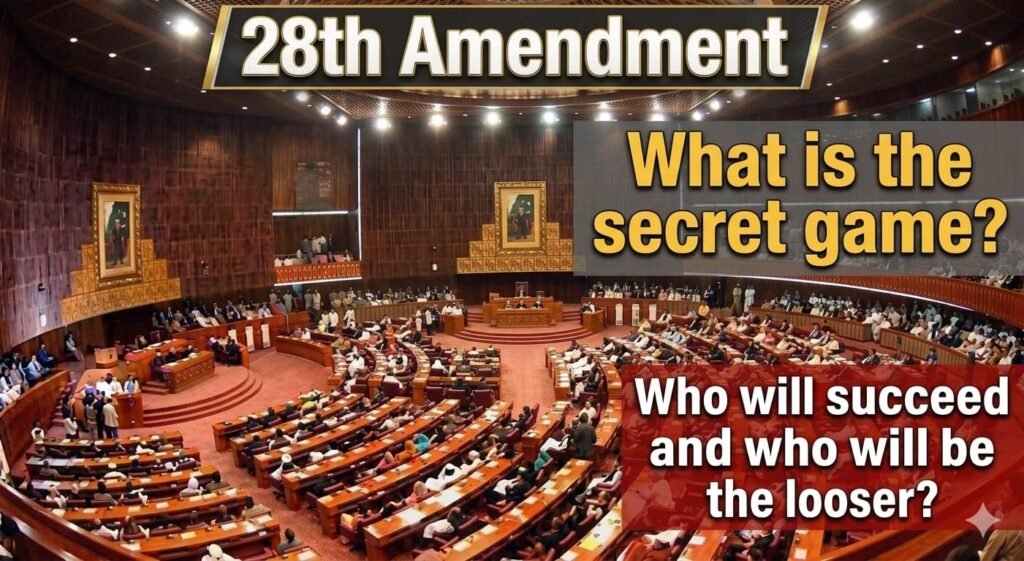
Increasing Frequency of Political Consultations
Backchannel Diplomacy and Coalition Strategy
Islamabad Witnesses Surge in Political Activity Over 28th Constitutional Amendment
Political temperatures have risen significantly in Islamabad as discussions around Pakistan’s potential 28th Constitutional Amendment gain momentum. A series of meetings, informal consultations, and backchannel engagements among political stakeholders have triggered widespread debate in parliamentary and political circles.
Although no official draft of the proposed amendment has been presented so far, sources indicate that various political actors—both within the ruling coalition and the opposition—are actively evaluating possible contours of the constitutional changes. The emerging situation has injected fresh uncertainty into the country’s already complex political landscape.
Speculation Around the Scope of the Amendment
While the exact content of the proposed 28th Amendment remains undisclosed, political speculation is growing regarding its possible scope. Some sources suggest it could relate to federal-provincial relations, local government structures, or broader institutional reforms.
Others argue that the amendment may involve changes to the electoral framework or administrative governance structures. However, none of these claims have been officially confirmed, and they remain in the realm of political speculation.
Parliamentary Number Game Takes Center Stage
The constitutional amendment process in Pakistan requires a two-thirds majority in Parliament, making the “numbers game” a decisive factor. The ruling coalition is reportedly working to ensure internal cohesion while simultaneously seeking additional support from smaller parties and independent members.
This has led to increased political maneuvering, with discussions reportedly involving potential seat adjustments and negotiated understandings among various political blocs.
Opposition Maintains a Cautious Stance
Opposition parties have responded cautiously but firmly to the ongoing developments. Leaders emphasize that constitutional amendments must not be rushed and should undergo thorough parliamentary debate and scrutiny.
They maintain that while reforms aimed at institutional improvement may be considered, any attempt that disturbs the constitutional balance will not be supported. The opposition is also reportedly working on its own internal strategy in response to the evolving situation.
Analysts Warn of Broader Political Impact
Political analysts suggest that constitutional amendments in Pakistan often have far-reaching implications beyond legislative changes. If the 28th Amendment moves forward, it could potentially reshape the balance of power between institutions and impact both federal and provincial governance structures.
Experts also highlight that constitutional reforms require not only political consensus but also sensitivity toward provincial concerns and public perception, making the process highly complex.
Public Debate and Social Media Reactions
The issue has also gained traction on social media, where users are actively debating the potential implications of the amendment. While some view it as a step toward political stability and institutional reform, others see it as the beginning of a new phase of political contestation.
Overall, the situation remains fluid and uncertain. Although no formal proposal has been presented, the increasing political activity suggests that significant developments regarding the 28th Constitutional Amendment may unfold in the coming days.