OIC Adopts Islamabad Declaration to Advance Women Empowerment Globally
 By abdullah
Published: 13 Jul 2026
3 min read
By abdullah
Published: 13 Jul 2026
3 min read
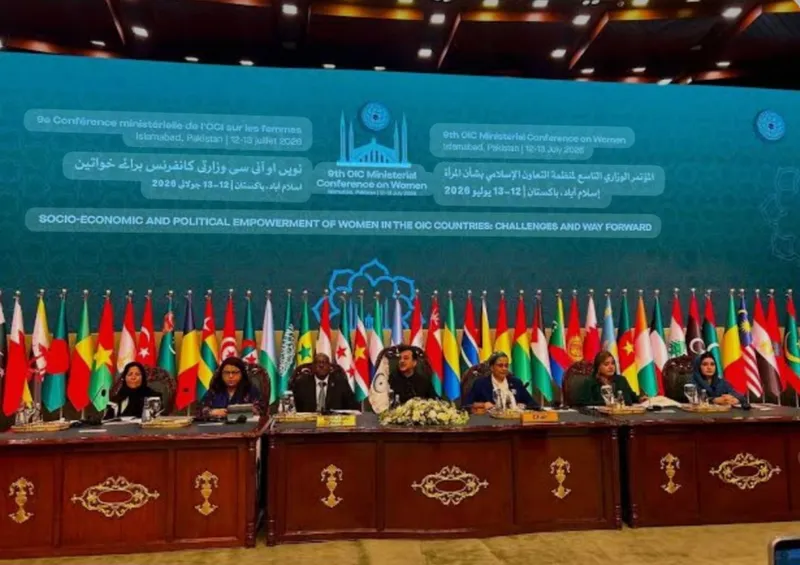
ISLAMABAD (special crosspondent) – The Ninth Ministerial Conference on Women of the Organisation of Islamic Cooperation (OIC) officially adopted the Islamabad Declaration on Monday, marking a pivotal moment in the bloc’s efforts to enhance the socio-economic and political standing of women. The declaration reaffirms the commitment of member states to fostering gender equality and launches a landmark initiative aimed at bridging the digital divide for women across the Muslim world.
According to the document released on the official OIC website, participating ministers and heads of delegations have pledged to institutionalize policies that guarantee the meaningful participation of women in all spheres of public and economic life. This aligns with broader efforts to strengthen regional cooperation, as noted in discussions regarding how Pakistan and Iran discuss advancing women’s rights and OIC agenda.
Strengthening Economic and Digital Inclusion
The declaration outlines a comprehensive strategy to remove barriers to education and employment. Member states are encouraged to enhance vocational training, expand access to microfinance, and bolster support for women-led small and medium-sized enterprises. Recognizing the shift toward a digital economy, the mandate specifically emphasizes women’s inclusion in Science, Technology, Engineering, and Mathematics (STEM), as well as artificial intelligence.
To facilitate this, the conference introduced the Islamabad Initiative on Women’s Digital Inclusion. This voluntary platform is designed to provide training in digital entrepreneurship, cybersecurity, and literacy, specifically targeting underserved rural populations. These collaborative efforts reflect a growing consensus on development, similar to recent dialogues on how Pakistan and Saudi Arabia reaffirm commitment to women’s empowerment initiatives.
Addressing Safety and Regional Solidarity
The declaration also calls for robust legal frameworks to combat violence against women, specifically addressing modern challenges such as cyber harassment and technology-facilitated abuse. Furthermore, it addresses the broader socio-political climate, emphasizing a united stance against Islamophobia and xenophobia. The document explicitly expresses solidarity with women in Palestine and Indian Illegally Occupied Jammu and Kashmir (IIOJK), urging the global community to extend humanitarian and psychological support to these populations.
Conclusion and Future Implementation
The conference concluded with the adoption of an omnibus resolution, which serves as a roadmap for future policy implementation. OIC Assistant Secretary-General Ambassador Dr. Tarig Ali Bakheet praised the consensus achieved by member states, noting that the ultimate success of the conference will depend on the effective execution of these resolutions.
“The real measure of success lies in the collective commitment to implement these measures and achieve measurable outcomes,” Dr. Bakheet stated, while congratulating Pakistan on assuming the chairmanship of the Ministerial Conference on Women. He confirmed that the OIC General Secretariat remains dedicated to working alongside Islamabad and the OIC Women Development Organization to ensure these commitments result in tangible improvements in the lives of women across the Islamic world.