United States and Saudi Arabia Ink Historic Civil Nuclear Agreement
 By abdullah
Published: 23 Jul 2026
2 min read
By abdullah
Published: 23 Jul 2026
2 min read
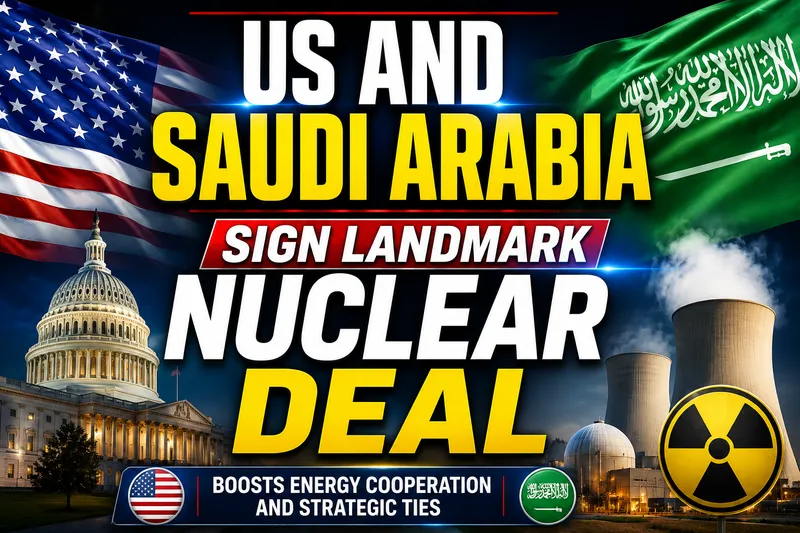
WASHINGTON (special crosspondent) – The United States and Saudi Arabia have officially signed a landmark civil nuclear cooperation agreement, marking a critical milestone in the Kingdom’s long-standing ambition to establish a civilian nuclear energy program. The accord was formally signed by U.S. Energy Secretary Chris Wright and Saudi Energy Minister Prince Abdulaziz bin Salman, signaling a significant deepening of strategic and energy ties between the two long-standing allies.
Understanding the 123 Agreement Framework
This bilateral arrangement, widely recognized in diplomatic circles as a “123 Agreement,” serves as a legal framework enabling Saudi Arabia to develop a robust civilian nuclear power sector by leveraging advanced U.S. technology and technical expertise. The core objective of the pact is to facilitate the Kingdom’s transition toward a more diversified energy portfolio, effectively reducing domestic oil reliance for electricity generation while bolstering broader economic transformation agendas, a goal echoed in national development strategies similar to those discussed during high-level economic dialogues involving international partners.
Legislative Review and Proliferation Safeguards
The agreement is now slated for a formal 90-day review period within the U.S. Congress before it can officially enter into force. U.S. officials have emphasized that the text includes comprehensive safeguards strictly designed to prevent the unauthorized use or diversion of nuclear technology. Conversely, the move has invited scrutiny from various stakeholders, with critics expressing reservations regarding the potential for uranium enrichment processes to heighten nuclear proliferation risks throughout the Middle East.
Geopolitical Significance and Strategic Implications
This development signifies a notable recalibration in the trajectory of U.S.-Saudi relations, particularly as the pact was finalized independently of any concurrent Saudi-Israeli normalization arrangement. Foreign policy analysts contend that the agreement carries substantial geopolitical weight, potentially reshaping regional dynamics. Much like initiatives that advocate for enhanced regional scientific cooperation, this partnership is expected to create novel avenues for technological exchange in the civilian sector, further cementing the Kingdom’s role as a growing hub for industrial and energy-related innovation.