Central Asia Seeks Trade Corridor Access Through Pakistan Ports
 By abdullah
Published: 29 Jul 2026
2 min read
By abdullah
Published: 29 Jul 2026
2 min read
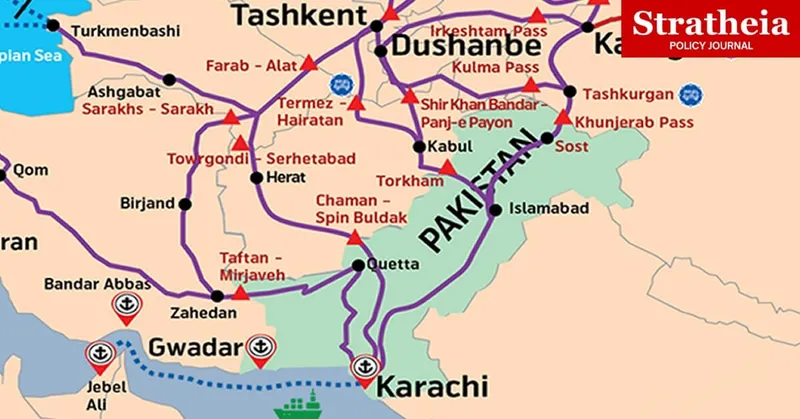
ISLAMABAD (special crosspondent) – Central Asian nations are intensifying diplomatic and economic efforts to establish a robust trade corridor linking their landlocked economies to Pakistani seaports. Access to the Arabian Sea is increasingly viewed by regional stakeholders as a vital necessity for expanding export capacity and curtailing escalating transportation costs. Despite the clear economic rationale, the ongoing deterioration of Pakistan-Afghanistan relations presents a significant structural challenge to these transit aspirations. According to recent geopolitical analysis, the trans-Afghan trade route remains the most geographically viable and cost-effective pathway for Central Asian republics, including Kazakhstan, Uzbekistan, Kyrgyzstan, Tajikistan, and Turkmenistan, to reach maritime gateways such as Karachi, Port Qasim, and Gwadar. This route is strategically prized for providing direct, efficient access to international shipping lanes.
Challenges to Regional Transit
The report highlights that logistical planning is frequently undermined by the strained diplomatic climate between Islamabad and Kabul. The recent closure of major border crossings has severely disrupted truck-borne freight, fostering deep-seated uncertainty regarding the future of reliable transit connectivity. Consequently, Central Asian governments are now actively evaluating alternative logistics networks while simultaneously maintaining their long-term commitment to securing access through Pakistan. This strategic pivot reflects a broader desire to diversify trade routes, reducing the reliance on traditional northern corridors via Russia or current routes through Iran.
Strategic Importance of Gwadar Port
Pakistan’s maritime infrastructure is increasingly perceived as a primary gateway for Central Asian trade, offering a comparatively shorter journey to burgeoning markets in the Middle East, Africa, and South Asia. Gwadar Port is identified as holding immense long-term potential, largely due to its proximity to global maritime lanes and its ongoing integration within the China-Pakistan Economic Corridor (CPEC). Analysts suggest that while stable transit through Afghanistan is the most efficient long-term solution, the persistent regional security concerns have prompted these nations to pursue multi-modal connectivity to avoid over-dependence on a single channel. The success of these initiatives rests upon sustained regional cooperation, enhanced security protocols, and the robust implementation of cross-border transport agreements, which would benefit both Central Asian exporters and Pakistan through heightened transit revenues and deeper economic integration, similar to the broader dialogues observed in recent bilateral strategic talks.