Moscow Format Afghanistan Talks Turn Tense as Pakistan Raises Terrorism, Cross-Border Infiltration; Taliban and Regional Powers Join Crucial Consultations
 By hanif sabir
Published: 06 Oct 2026
3 min read
By hanif sabir
Published: 06 Oct 2026
3 min read
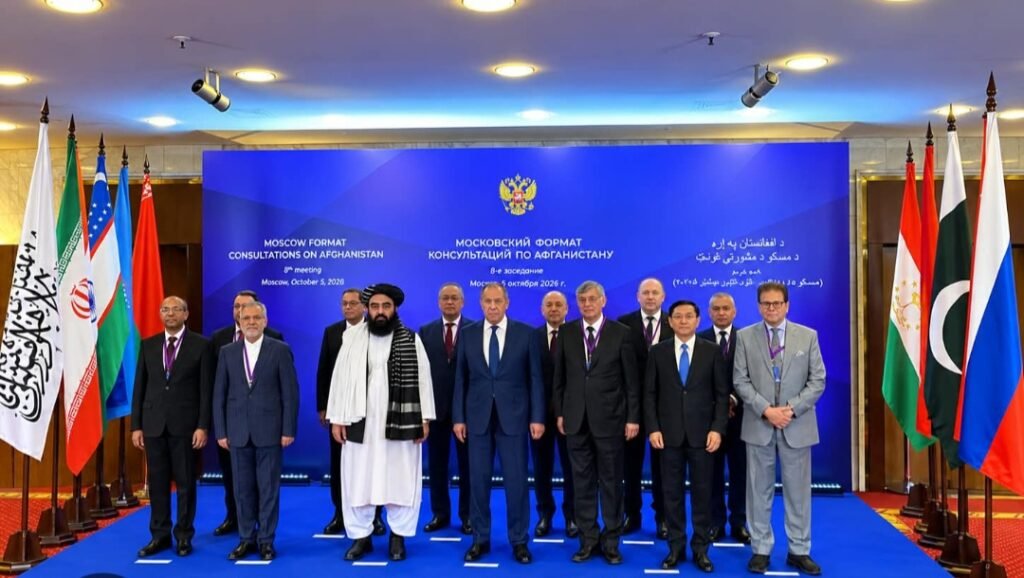
MOSCOW, Oct 5 — A high-level Afghanistan conference in Moscow has brought Pakistan, the Afghan Taliban administration and several regional powers together amid heightened tensions between Islamabad and Kabul, with Pakistan putting terrorism and cross-border infiltration at the centre of the discussions.
Pakistan used the eighth round of the Moscow Format Consultations to raise serious security concerns over terrorist groups operating from Afghan soil and attacks targeting Pakistan. Islamabad maintained that terrorism emanating from Afghanistan remains a major threat to regional peace and security.
Pakistan was represented by Ambassador Muhammad Sadiq, Special Assistant to the Prime Minister and Special Representative for Afghanistan. The Pakistani delegation also included Ambassador Faisal Niaz Tirmizi, Pakistan’s ambassador to Russia, Ambassador Ubaid-ur-Rehman Nizamani, Pakistan’s ambassador to Afghanistan, and other senior officials.
According to Pakistan’s position presented at the consultations, Islamabad will continue to take appropriate measures to protect its citizens in accordance with international law. Pakistani officials have repeatedly raised concerns over militant activity along the Pakistan-Afghanistan border and the alleged presence of groups involved in attacks inside Pakistan.
The talks also brought Pakistan and the Afghan Taliban administration face to face at a particularly sensitive moment in bilateral relations. Acting Afghan Foreign Minister Amir Khan Muttaqi called for dialogue and diplomacy to resolve differences between the two neighbours, while rejecting Pakistan’s allegations and criticising Pakistani military actions.
The meeting took place shortly after Russian Foreign Minister Sergey Lavrov welcomed Muttaqi in Moscow. Lavrov congratulated the Taliban official on what Russia described as the fifth anniversary of Afghanistan’s “liberation from NATO forces,” reflecting Moscow’s increasingly open engagement with the Taliban administration.
Russia also signalled its readiness to help ease tensions between Pakistan and Afghanistan. Russian presidential envoy for Afghanistan Zamir Kabulov said Moscow could assist in resolving the dispute if both sides requested its involvement.
Representatives from Pakistan, Afghanistan, Russia, China, India, Iran and Central Asian states participated in the eighth Moscow Format Consultations, while Belarus and Egypt attended as invited guests.
The discussions covered Afghanistan’s security situation, terrorism, counter-narcotics efforts, regional connectivity, economic cooperation and broader political developments.
The Moscow meeting comes as Islamabad and Kabul face mounting security tensions, with Pakistan repeatedly demanding effective action against militant groups allegedly operating from Afghan territory. Afghanistan, for its part, has rejected accusations that it allows its territory to be used against neighbouring countries.
The latest consultations therefore provided a significant diplomatic platform for Pakistan to put its security concerns directly before Afghanistan and the major regional powers, while Russia sought to keep channels of dialogue open between the two sides.