US Political Realignment Signals Major Shifts for Global Foreign Policy
 By abdullah
Published: 06 Nov 2026
3 min read

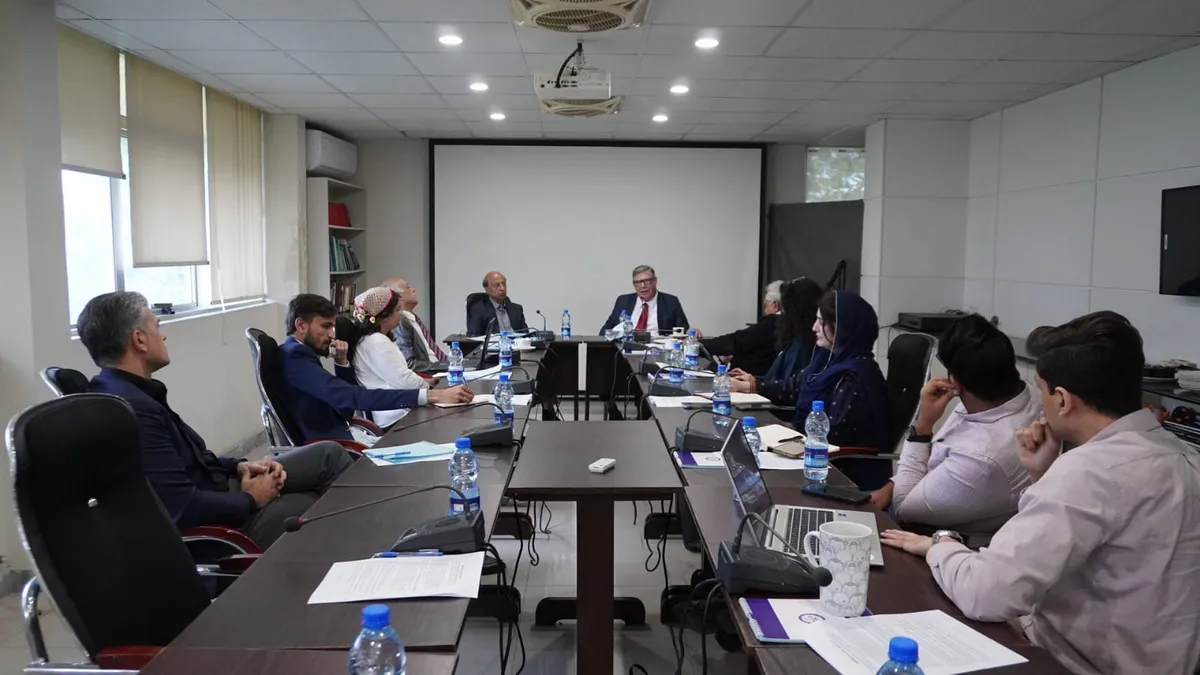
ISLAMABAD (Special Correspondent) – The United States is experiencing a significant political realignment that could reshape its domestic and foreign policy priorities, according to American scholar Dr Kenneth Holland. Speaking at an interactive session hosted by the Center for Research and Security Studies (CRSS) in Islamabad on 6 November 2026, Dr Holland highlighted that strategic competition with China will remain a primary bipartisan concern regardless of electoral outcomes.
Key Points
- Dr Kenneth Holland described recent US electoral developments as a political earthquake.
- Republican setbacks were attributed to economic pressures like inflation and interest rates.
- Containment of China remains a rare area of bipartisan consensus in Washington.
- Pakistan can explore economic cooperation in critical minerals and information technology sectors.
- Washington’s strategic partnership with India has historically been influenced by China’s rise.
US Political Realignment and Economic Policy
Dr Holland identified recent electoral developments as a political earthquake, attributing Republican challenges largely to economic pressures, including rising consumer prices and interest rates. He argued that protectionist policies, particularly the implementation of tariffs, have increased costs for American consumers. These fiscal challenges have, in some instances, undermined the economic expectations that once bolstered political support for President Donald Trump. Tracing this evolution, Dr Holland compared the current shift to Franklin D. Roosevelt’s reshaping of the Democratic Party in the 1930s. He noted that the political realignment under Donald Trump marks a departure from the free-market, limited-government philosophy historically associated with the Republican Party under Ronald Reagan.
Future of US Foreign Policy and Pakistan Ties
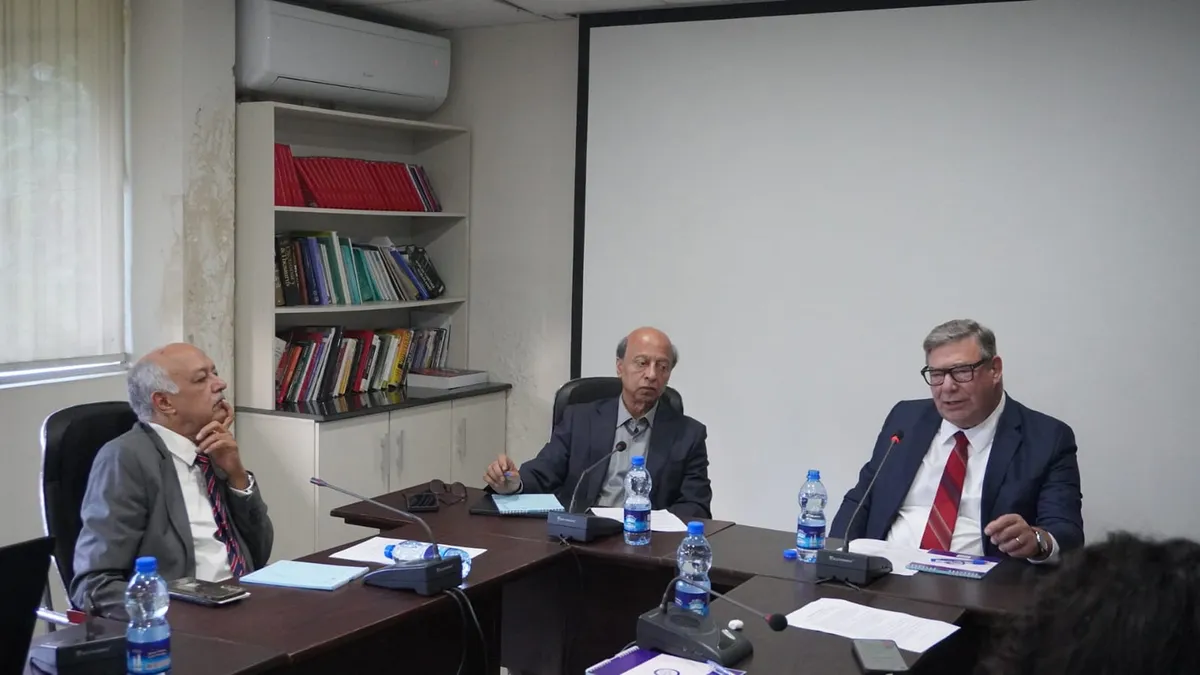
On the subject of China, Dr Holland emphasized that containing Beijing’s growing influence remains one of the few areas of absolute bipartisan consensus in Washington. He anticipated no softening of this stance under a Democratic-controlled Congress, suggesting instead that policymakers might advocate for a redirection of military resources from the Middle East toward the Indo-Pacific region. Regarding Pakistan–US relations, Dr Holland observed that while the US–India strategic partnership has traditionally been driven by concerns over China, recent regional tensions have created new openings for Islamabad. However, he cautioned against framing bilateral ties solely around fluctuations in Washington’s relationship with New Delhi. He identified critical minerals, surgical instruments, information technology, and artificial intelligence-related services as the most promising avenues for long-term economic cooperation. Dr Holland stressed that Pakistan remains responsible for ensuring the domestic infrastructure and security required to attract American investment into its mining sector. He ultimately advocated for strengthening trade, investment, and educational exchanges to create a more durable partnership that extends beyond traditional security-centric foundations. The dialogue at CRSS serves as part of the organization’s ongoing effort to engage international experts on global geopolitical shifts.
Frequently Asked Questions
What are the primary areas for potential Pakistan-US economic cooperation?

Dr Kenneth Holland identified critical minerals, surgical instruments, information technology, and artificial intelligence-related services as promising sectors for bilateral cooperation.
Why is the United States undergoing a political realignment?
The realignment is driven by shifts in economic policy, including a move toward economic nationalism and protectionism, which mark a departure from traditional Republican free-market principles.

Comments (1)