Awais Leghari Invites Turkmenistan Energy Minister to Join CASA-1000 Project
 By abdullah
Published: 16 Nov 2026
3 min read
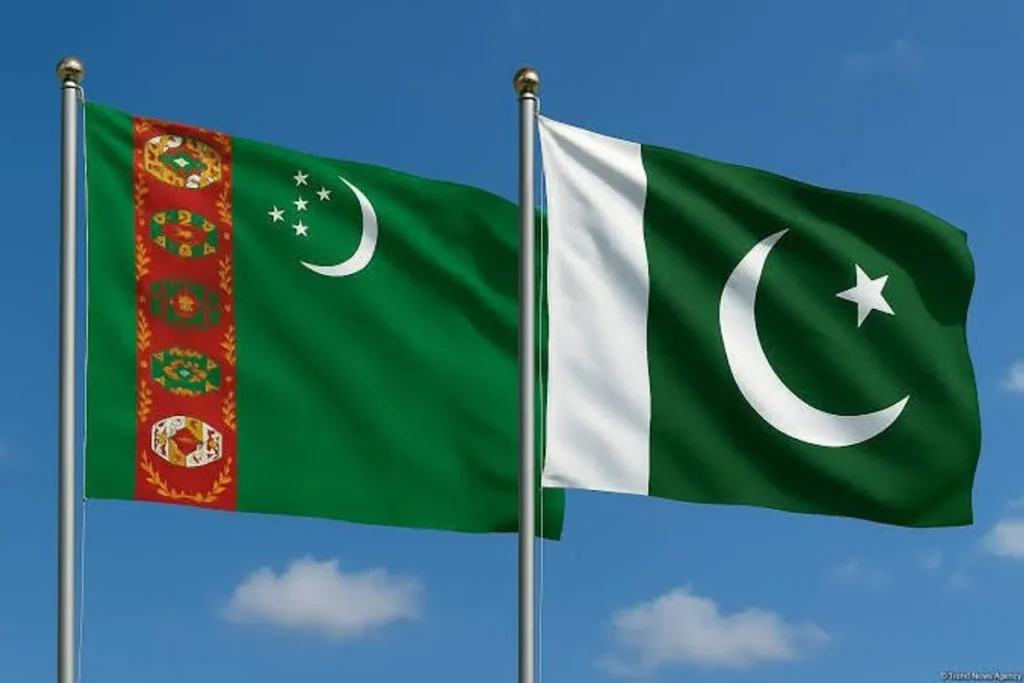
ISLAMABAD (Special Correspondent) – Federal Minister for Energy (Power Division) Sardar Awais Ahmad Khan Leghari met with Turkmenistan’s Minister of Energy Annageldi Saparov on 16 November 2026 to deliberate on regional energy security and grid connectivity. The discussions centered on enhancing bilateral cooperation and the progress of the Turkmenistan-Afghanistan-Pakistan (TAP) power transmission project, which aims to bolster energy ties between the participating nations.
Key Points
- Sardar Awais Ahmad Khan Leghari invited Turkmenistan to join the CASA-1000 project to enhance regional connectivity.
- Pakistan proposed that Iran and Turkmenistan explore expanding electricity transmission capacity to support industrial growth in Gwadar.
- The TAP project is expected to deliver electricity to over 300 million people across the region.
- Turkmenistan has completed the transmission line construction up to the border of Afghanistan.
- Both countries agreed to expedite technical data exchanges to finalize the roadmap for the TAP project.
Strategic Regional Energy Integration
During the meeting, Minister Leghari emphasized that Pakistan is actively promoting the integration of regional energy markets to ensure the provision of affordable electricity. He highlighted that Pakistan currently maintains a surplus in power generation and is in the process of establishing a competitive energy market. Addressing the potential of the CASA-1000 framework, the minister proposed converting the current one-way power flow into a two-way system to allow for reciprocal electricity exchanges during periods of high demand.
Regarding the development of infrastructure, the minister noted that future industrial activities in Gwadar would necessitate significant power augmentation. He suggested that a joint expert group be established to evaluate the feasibility of extending electricity transmission from Iran and Turkmenistan into the Gwadar region. Minister Leghari stressed that the long-term success of regional initiatives, including major trade and infrastructure projects, depends on economic and financial viability to benefit end consumers.
Progress on the TAP Transmission Project
Minister Saparov expressed appreciation for the hospitality extended by the Government of Pakistan and reaffirmed his nation’s dedication to the TAP project. He confirmed that Turkmenistan has already completed the transmission infrastructure up to the Afghan border. The remaining phases, including the feasibility study for the 1,150-kilometer, 500 kV transmission line designed to carry 1,200 MW of power from Afghanistan to Quetta, will now be prioritized.
Minister Leghari noted that while Pakistan has already provided three of the seven fundamental technical data sets required for the project, the process must be accelerated. He urged both nations to convene their technical working groups immediately to establish a concrete implementation timeline. Minister Saparov assured that he would personally monitor the resolution of outstanding technical matters to ensure the project remains on track through regular coordination between focal persons.
Frequently Asked Questions
What is the primary objective of the CASA-1000 invitation?
The invitation aims to integrate regional energy markets and enhance economic viability by allowing for reciprocal electricity exchanges between Pakistan, Turkmenistan, and other regional partners.
How will the TAP project benefit the region?
The TAP power transmission project is designed to provide electricity to over 300 million people, supported by a 1,200 MW capacity line connecting Turkmenistan through Afghanistan to Quetta.



Comments (1)