Iran Revolutionary Guards Threaten To Disrupt Global Middle East Energy
 By abdullah
Published: 16 Jul 2026
2 min read
By abdullah
Published: 16 Jul 2026
2 min read
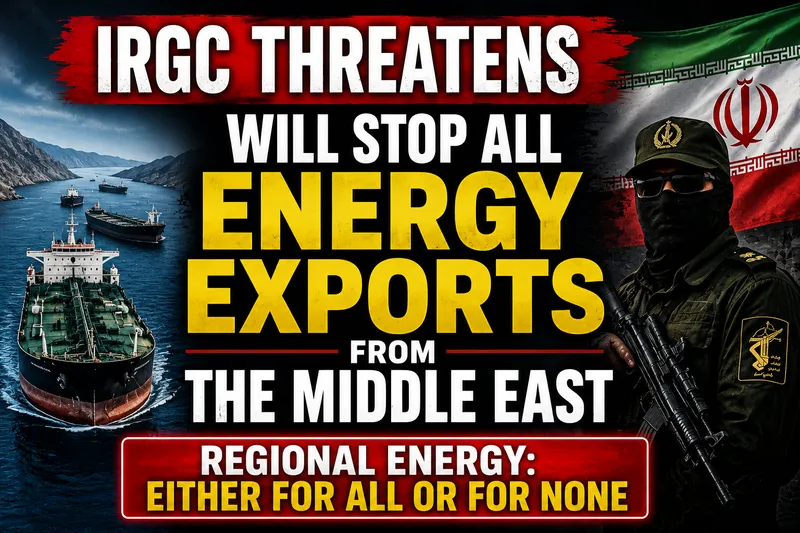
TEHRAN (special crosspondent) – The Islamic Revolutionary Guard Corps (IRGC) of Iran has issued a stern warning threatening to disrupt global energy supplies originating from the Middle East. This declaration comes in response to what Tehran characterizes as a persistent U.S. naval blockade, with the IRGC asserting that if Iranian oil and gas exports are forcibly obstructed, export routes utilized by other nations in the region will also face closure.
In an authoritative statement disseminated via Iranian state media, the IRGC articulated a clear position: regional energy exports will either remain accessible to all stakeholders, or they will be denied to everyone. The organization cautioned that if economic and military pressures against Iran persist, critical commercial shipping lanes that benefit the United States and its international allies could become primary targets for disruption.
Strategic Implications for the Strait of Hormuz
The IRGC explicitly stated that the strategically vital Strait of Hormuz will remain under restriction until such time as the United States ceases what Tehran describes as aggressive maneuvers and the ongoing blockade of Iranian ports. Despite the gravity of the rhetoric, Iranian officials have not announced any immediate military operations or specific tactical actions at this time. This development follows a recent period of heightened geopolitical friction between Tehran and Washington, exacerbated by intensified U.S. efforts to tighten naval surveillance and exert maximum economic pressure on Iran, a topic frequently discussed in the context of economic stability and global market security.
Global Market Risks and Military Tensions
Energy analysts and defense experts have issued grave warnings regarding the potential fallout if Iran follows through on these threats. Any disruption to major Gulf energy export routes would likely trigger a severe constriction in global oil and natural gas supplies. Market observers anticipate that such an escalation could prompt a precipitous increase in global energy prices and significantly heighten the probability of a wider, multi-national military confrontation within the Persian Gulf region. These tensions highlight the fragile nature of international diplomacy, an area where officials like Finance Minister counterparts often emphasize the need for stability through bilateral engagement. Meanwhile, analysts continue to monitor how strategic international visits and defense posturing across the region may influence these cooling or heating conflicts.