Pakistan Denounces India’s Actions in Kashmir as State Terrorism
 By abdullah
Published: 06 Aug 2026
2 min read
By abdullah
Published: 06 Aug 2026
2 min read
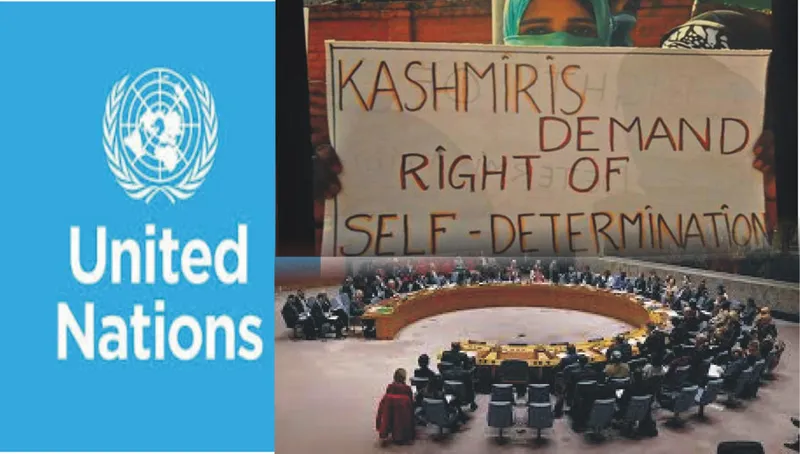
UNITED NATIONS (special crosspondent) – Pakistan formally addressed the UN Security Council on Wednesday, denouncing India’s 2019 annexation of Indian-illegally occupied Jammu and Kashmir. Ambassador Asim Iftikhar Ahmad, Pakistan’s Permanent Representative to the UN, condemned the move, which involved the deployment of 90,000 Indian troops, as the “worst example of state terrorism.”
Anniversary of Unilateral Measures
“Today, 5 August marks a grim occasion – it is the seventh anniversary of the unlawful and unilateral measures imposed in Indian-illegally occupied Jammu and Kashmir,” Ambassador Ahmad stated during a debate on ‘Threats to international peace and security caused by terrorist acts.’ He emphasized the necessity for robust international cooperation to combat global terrorism. As highlighted in recent diplomatic initiatives, Pakistan remains steadfast in its support for the Kashmiri people, who have endured over seven decades of systemic injustice and the denial of their fundamental right to self-determination, as guaranteed by the UN Security Council.
Global Counter-Terrorism Standards
Ambassador Ahmad underscored that Pakistan maintains a zero-tolerance policy toward state-sponsored terrorism. He warned the international community against allowing counter-terrorism rhetoric to be manipulated as a pretext for suppressing legitimate struggles for self-determination. The envoy urged a cohesive global strategy, noting that regional stability requires transparency and an absence of double standards.
Security Concerns Regarding Afghanistan
Addressing the situation in Afghanistan, the Ambassador noted a permissive environment for terror groups following the 2021 Taliban takeover. He identified the TTP, BLA, and its Majeed Brigade, as well as ISIL-K and Al-Qaeda affiliates, as groups currently operating from within Afghan territory. “We must effectively address this increasingly dangerous terrorist threat emanating from Afghanistan,” he said, calling for accountability regarding the Taliban’s obligation to prevent their soil from being used to threaten neighboring nations.
UN Report on Da’esh
Briefing the 15-member Council, Oguljeren Niyazberdiyeva, Chief of the Office of the Under-Secretary-General for Counter-Terrorism, presented the twenty-third report on the activities of ISIL/Da’esh. She noted that while counter-terrorism operations have impacted the group’s senior leadership, Da’esh continues to exploit fragile security environments and emerging technologies, including artificial intelligence. The UN noted the need for sustained vigilance as these groups adapt to decentralized operational models. Consistent with international efforts, Pakistan reiterated its commitment to collaborative security frameworks to disrupt financing channels, including the illicit use of virtual assets and cryptocurrencies.