Pakistan and Kyrgyzstan to Boost Cooperation in Key Sectors
 By abdullah
Published: 07 Jul 2026
5 min read
By abdullah
Published: 07 Jul 2026
5 min read
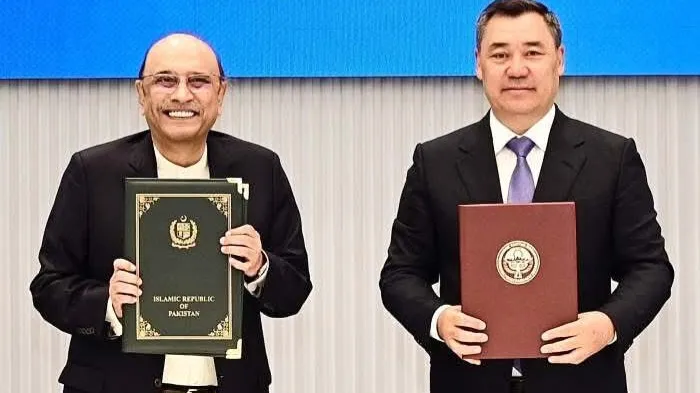
ISLAMABAD (special crosspondent) – Pakistan and the Kyrgyz Republic have agreed to significantly enhance cooperation across a broad spectrum of sectors, including trade, energy, connectivity, security, science, education, combating terrorism, and managing irregular migration. The two nations acknowledged the substantial potential for increased collaboration in the energy domain, particularly through the successful implementation of the CASA-1000 Project, a critical initiative connecting Central and South Asia.
Bilateral Relations Strengthened
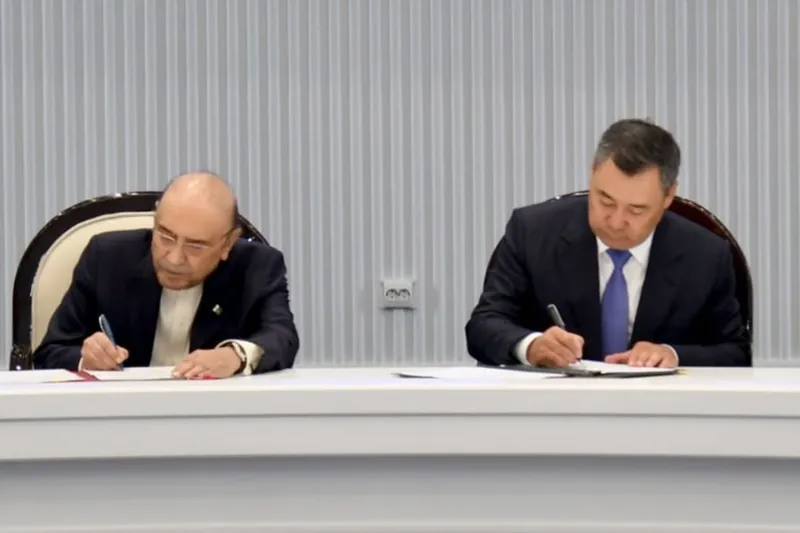
At the invitation of President Sadyr Japarov, the President of the Islamic Republic of Pakistan, Asif Ali Zardari, undertook an official visit to the Kyrgyz Republic from 6-9 July 2026. A joint declaration was signed and released from Cholpon-Ata on July 7, 2026. The leaders held discussions in an environment of traditional friendship, mutual trust, and understanding, expressing satisfaction with the consistent development of Kyrgyz-Pakistani relations. Both Presidents reaffirmed their dedication to deepening bilateral cooperation and stressed the importance of diligently implementing the agreements reached during President Japarov’s state visit to Pakistan from 3-4 December 2025.
Political and Economic Collaboration
The sides highlighted the necessity of maintaining active political dialogue, expanding high-level contacts, and strengthening interaction among their parliaments, governments, and foreign ministries. Aspiring to establish a strategic partnership, the Heads of State emphasized the critical need to deepen trade, economic, and investment cooperation. They directed their respective governments and agencies to intensify joint efforts to execute agreements and implement practical measures for developing trade, investment, and business ties. Both nations underscored the importance of enhancing inter-agency cooperation mechanisms and improving the effectiveness of the Kyrgyz-Pakistani Intergovernmental Commission on Trade, Economic, Scientific, and Technical Cooperation, along with its associated Joint Working Groups.
Furthermore, the Heads of State affirmed their commitment to supporting direct engagement between the business communities of both countries, including chambers of commerce, investment promotion agencies, and financial institutions. They aim to encourage joint projects and the establishment of joint ventures. Significant potential was identified for expanding bilateral cooperation in mining, agriculture, textile and light industries, the halal industry, healthcare, and pharmaceuticals. Specific areas of focus include medical education, regulatory harmonization, vaccine and biological product manufacturing, joint pharmaceutical production ventures, and facilitated market access through closer cooperation between drug regulatory authorities. Collaboration in the digital economy, information and communication technologies, tourism, and the banking and financial sector were also emphasized. Both nations agreed to foster cooperation between their regulatory and standards authorities, particularly in the halal sector, to facilitate trade and build mutual confidence.
Connectivity Initiatives
The Heads of State underscored the strategic significance of bolstering transport connectivity between Central and South Asia, reaffirming the importance of practically implementing agreements in transport, logistics, and transit. They reiterated their readiness to continue joint efforts in effectively utilizing Pakistan’s seaports, developing multimodal transport, promoting international transport corridors linking Central and South Asia, and leveraging the transit and logistics potential of the Kyrgyz Republic to access markets in Central Asian countries and the Eurasian Economic Union. Additional measures will be taken to increase cargo transportation volumes and ensure the sustainable operation of transport and logistics routes.
Education, Youth, and Culture Exchange
The Presidents reaffirmed a mutual interest in advancing cooperation in education, science, culture, tourism, and youth exchanges. This includes exchanges in medical and public health, quality assurance in medical education, and professional regulatory collaboration, alongside strengthening people-to-people contacts.
Security Cooperation Against Transnational Threats
The Heads of State emphasized the importance of enhancing cooperation between competent authorities to combat terrorism, extremism, illicit drug trafficking, organized crime, irregular migration, and cybercrime. Condemning terrorist attacks regionally and globally, the leaders stressed that peace and stability are crucial for progress and prosperity. They pledged to collaborate at international forums, including the UN, SCO, and OIC, to counter terrorism in all its manifestations.
Cooperation in International Forums
The sides underscored the importance of coordinated efforts and mutual support within the United Nations, Shanghai Cooperation Organization (SCO), Organization of Islamic Cooperation (OIC), Economic Cooperation Organization (ECO), and other international and regional bodies. Pakistan expressed strong support for the Kyrgyz Republic’s priorities during its chairmanship of the SCO. Both nations highlighted the need for close coordination during Pakistan’s upcoming chairmanships of the SCO and ECO. Leaders noted that the use of unilateral economic sanctions contravenes UN Charter principles and international law, negatively impacting global food and energy security and hindering the achievement of UN Sustainable Development Goals. President Japarov thanked Pakistan for supporting Kyrgyzstan’s bid for a non-permanent seat on the UN Security Council for the 2027-2028 term, with President Zardari congratulating Kyrgyzstan on its election and reaffirming close cooperation within the UN. The Kyrgyz Republic commended Pakistan’s contributions to international peace and security during its 2025-2026 UN Security Council term, welcoming UNSC Resolutions 2788 (2025) and 2823 (2026) which resulted from Pakistan’s efforts, and acknowledged Kyrgyzstan’s co-sponsorship of the latter. Pakistan welcomed the UN General Assembly Resolution 80/261, initiated by Kyrgyzstan, on the peaceful settlement of border disputes. The Kyrgyz Republic commended Pakistan’s mediation efforts in the Middle East, welcoming the signing of the Islamabad Memorandum of Understanding (MoU), which both sides hope will foster lasting regional peace. Leaders emphasized prompt, peaceful dispute settlement in line with the UN Charter, advocating for a secure environment to realize the cooperation potential between Central and South Asia. Pakistan supports Kyrgyzstan’s international initiatives on mountains and climate change, including the upcoming Second Global Mountain Summit. The Kyrgyz Republic invited Pakistan to the VI World Nomad Games, an invitation Pakistan gratefully accepted, confirming its intention to send a delegation and sports teams.
Conclusion of Visit
The Heads of State expressed confidence that President Zardari’s visit would further strengthen relations and expand mutually beneficial cooperation between the two countries. President Zardari expressed his sincere gratitude for the warm hospitality and extended an invitation to President Japarov to visit Pakistan at a convenient time, which was accepted. The dates will be coordinated through diplomatic channels.