Trump’s Iran War: A Decision Taken in Haste?
 By hanif sabir
Published: 26 Aug 2026
9 min read
By hanif sabir
Published: 26 Aug 2026
9 min read
By Hanif Sabir
The latest turn in the US-Iran conflict raises a question that deserves much more serious examination than the daily exchange of threats and military statements: was President Donald Trump’s decision to take the United States into war with Iran based on a carefully developed political strategy, or was it a major decision taken in haste?
The question is becoming increasingly difficult to dismiss.
The United States has spent months using military force against Iran, yet Washington is now returning to sanctions, economic pressure and diplomacy. US Secretary of State Marco Rubio has reportedly informed allies that the administration is shifting its approach from military strikes toward sanctions, at least for the time being.
At the same time, diplomatic efforts to bring Iran back to negotiations continue.
This raises an obvious question: if sanctions and negotiations remain essential instruments for achieving Washington’s objectives, why was military action undertaken before the diplomatic and economic options had produced a final outcome?
The issue is not whether Trump had the right to respond to an Iranian threat. Nor is it an argument that military force can never be justified. The real issue is whether the decision to launch a major war was accompanied by a sufficiently clear understanding of what would happen after the initial military objectives were achieved.
That is where the Trump administration’s policy increasingly appears vulnerable to criticism.
A decision made before the endgame was clear
The most striking feature of the Iran conflict has been the apparent movement in Washington’s objectives and tactics.
At different stages, the emphasis has been placed on Iran’s nuclear programme, missiles, military capabilities, regional influence and broader political behaviour. Trump has also spoken in increasingly expansive terms about what Iran would have to accept for the conflict to end.
That creates an important distinction between a military objective and a political objective.
Destroying targets is a military objective.
Getting Iran to accept a durable agreement is a political objective.
The latter requires considerably more than military superiority.
A government contemplating war therefore has to know not only how to begin a conflict but what political settlement it intends to achieve at the end.
The developments of recent months suggest that this second question may not have received sufficient attention before the decision for war was made.
The most revealing example may be what Washington is doing now.
Trump is again using sanctions as a major instrument of pressure. The administration has launched another extensive economic campaign against Iran, while Iran remains under severe economic pressure but has not demonstrated a willingness to simply accept Washington’s demands.
If economic pressure is still considered necessary to achieve the desired political result, it is reasonable to ask whether the economic and diplomatic route should have been given more time before the military option was chosen.
The Asim Munir connection
The strongest illustration of this contradiction came only days ago.
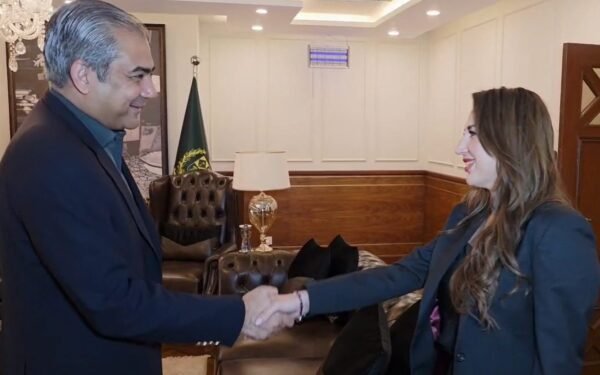
According to Reuters, President Trump spoke with Pakistan’s Field Marshal Asim Munir shortly before Munir travelled to Tehran. Three Pakistani sources told Reuters that Trump wanted Pakistan to use its influence to encourage Iran to return to negotiations.
Munir subsequently travelled to Tehran as part of Pakistan’s diplomatic efforts to help end the conflict.
This is a significant development.
The United States is the world’s most powerful military state. Yet after months of military confrontation, Washington is seeking the assistance of Pakistan—a country that maintains relations with both Washington and Tehran—to help bring Iran back to the negotiating table.
There is nothing unusual or inherently negative about using a third country for diplomacy. In fact, successful international negotiations often depend on intermediaries.
But the timing is revealing.
If Pakistan can be asked to persuade Tehran to return to negotiations now, the obvious question is whether such diplomatic channels could have been exploited more intensively before the war began.
Pakistan was not the only possible intermediary. Oman, Qatar and other regional states have maintained communication channels with Iran and the United States.
The point is not that diplomacy would certainly have succeeded.
The point is that the existence of these channels makes the decision to move so rapidly toward war deserving of scrutiny.
Trump’s own reversal of emphasis
Another indication of the problem is the changing emphasis in Trump’s own approach.
There have been moments when Washington has appeared close to negotiations, followed by renewed military threats. There have been periods of military escalation followed by diplomatic overtures. And now the administration is again placing heavy emphasis on sanctions and economic pressure.
Such changes can be explained as tactical flexibility.
But there is a difference between flexibility and the absence of a clearly defined strategy.
A leader can deliberately keep several options open. That is legitimate statecraft.
But when the fundamental objective itself appears to move between military destruction, coercive pressure and negotiation, questions naturally arise about whether the decision-making process was sufficiently coherent before the war began.
This is particularly important because Trump has traditionally presented himself as a leader who prefers to avoid America’s involvement in prolonged foreign wars.
The Iran conflict therefore deserves examination against that stated political philosophy.
If the war now requires prolonged economic warfare, mediation through third countries and renewed negotiations, it is reasonable to ask whether the administration underestimated the complexity of confronting Iran.
The cost of an impulsive decision
The danger of a hasty decision is not simply that a military operation may fail.
The greater danger is that the initial decision creates a chain of consequences that becomes increasingly difficult to control.
The Iran conflict has already expanded beyond the original battlefield. The Strait of Hormuz has become a central component of the confrontation, affecting energy supplies and international shipping. Reuters now describes the conflict as having evolved into a prolonged energy war, with neither side achieving a decisive breakthrough.
That is precisely the type of development that should have been incorporated into the original decision-making process.
A war with Iran was never likely to remain confined to a few military targets.
Iran has regional relationships, strategic geography and the ability to impose costs far beyond its immediate territory.
A careful decision therefore required not only an assessment of Iran’s military capabilities but also an assessment of the likely regional, economic and diplomatic consequences.
The question is whether that broader assessment was sufficiently reflected in the decision to go to war.
This is not hindsight.
The evidence is in the subsequent policy itself.
If Washington is now compelled to use sanctions, third-party mediation and negotiations to achieve an outcome, those instruments were not invented after the war. They existed before it.
That is the heart of the argument.
A major power should not discover the importance of diplomacy only after military action has produced a stalemate.
The difference between unpredictability and strategy
One possible defence of Trump’s approach is that unpredictability is itself a negotiating instrument.
By keeping Iran uncertain about Washington’s next move, Trump may believe he can increase pressure and obtain better terms.
There is some logic to that argument.
But unpredictability works only when it is backed by a clear strategic objective.
Otherwise, unpredictability can become uncertainty even within one’s own policy.
The distinction is crucial.
A deliberate change of tactics is strategy.
Repeated changes without a clearly identifiable political destination can look like improvisation.
That is why the present Iran crisis deserves to be examined not merely through the lens of military success or failure, but through the quality of the decision-making that produced it.
The Asim Munir episode is especially telling.
Trump’s reported request for Pakistan to help bring Iran back to negotiations, immediately before Munir’s Tehran visit, suggests that Washington understands that there is no military substitute for a political settlement.
If that understanding exists today, it should have been part of the strategic calculation before the war began.
The real question for history
It is too early to declare the Iran war a complete strategic failure. The conflict is still unfolding, and its final outcome is unknown.
But it is not too early to question the decision-making process.
History will not judge the decision merely by counting the number of targets destroyed or military assets eliminated.
It will ask a simpler question:
Did the war achieve the political objective for which it was launched?
If the answer eventually requires another round of negotiations, another intermediary, another sanctions campaign and another diplomatic agreement, then the question of whether war was necessary—or whether it was chosen too quickly—will become unavoidable.
Trump may ultimately argue that military pressure created the leverage necessary to bring Iran back to negotiations.
That argument is possible.
But there is an equally plausible interpretation: that the administration entered a conflict without adequately defining the political endgame and is now attempting to use diplomacy and sanctions to solve a problem that military action alone could not resolve.
The emerging evidence makes the second interpretation increasingly difficult to ignore.
The reported conversation between Trump and Field Marshal Asim Munir before the Tehran visit is therefore more than a diplomatic footnote. It is a revealing moment in the larger story of the Iran war.
Washington went to war with Iran.
Months later, Washington is asking Pakistan to help bring Iran back to negotiations.
Washington imposed extraordinary military pressure.
Now Washington is again relying heavily on sanctions.
And the United States remains engaged in efforts to find a diplomatic formula for ending the conflict.
That sequence does not conclusively prove that Trump’s original decision was reckless.
But it does provide substantial grounds to argue that the decision may have been taken before its political consequences and possible endgame had been fully thought through.
For a president who built much of his political identity around avoiding unnecessary foreign wars, that would be a particularly serious contradiction.
The central lesson is therefore not that America should never use force.
It is that the decision to go to war with a country as strategically complex as Iran required extraordinary patience, planning and clarity.
If those qualities were missing at the moment the decision was made, then the Iran war may ultimately be remembered not as an example of bold strategic leadership, but as a classic case of a great power making a very big decision before fully thinking through what would come next.