US Businesses Warn Trump’s TPS Rollback Could Deepen Labour Shortages
 By abdullah
Published: 27 Jul 2026
2 min read
By abdullah
Published: 27 Jul 2026
2 min read
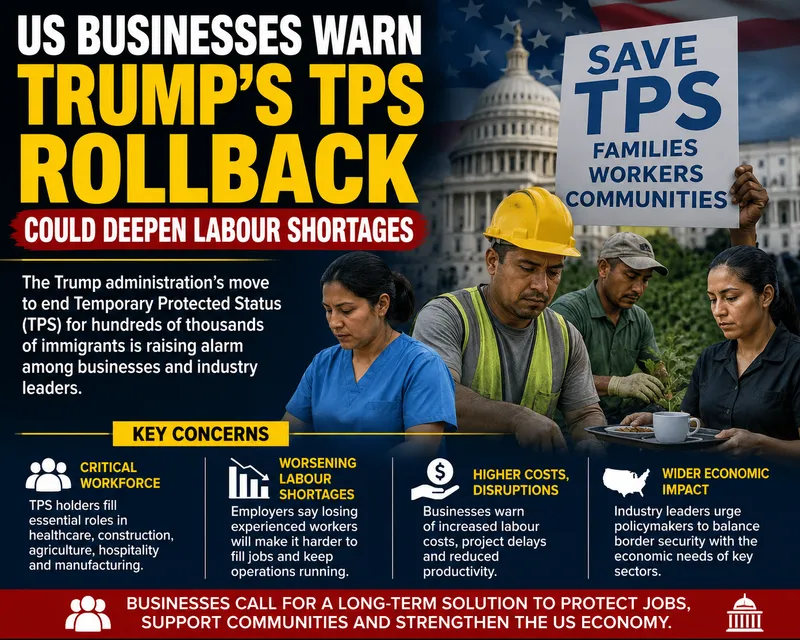
WASHINGTON (special crosspondent) – Businesses across the United States are raising alarms that the Trump administration’s initiative to end Temporary Protected Status (TPS) for a large cohort of immigrants could severely exacerbate labour shortages across several critical sectors of the economy.
Impact on Critical Economic Sectors
Employers state that thousands of TPS holders have evolved into an integral component of the workforce over many years, maintaining essential operations in healthcare, construction, agriculture, hospitality, and manufacturing. Industry representatives express deep concern that the loss of these experienced personnel would significantly hinder the ability to fill vital roles, disrupt business continuity, and trigger an increase in labour costs.
Government Policy vs. Economic Reality
The current administration maintains that TPS is designed strictly as a temporary humanitarian programme intended to protect individuals from nations enduring conflict, natural disasters, or other crises, arguing that it was never intended to function as a long-term immigration status. Conversely, employers and various business advocacy groups contend that many TPS beneficiaries have established deep societal roots in the United States and now play a foundational role in sustaining local businesses and public services. While discussions regarding Pakistan’s diplomatic stance on international labour are ongoing, domestic US industries are focused on the immediate operational risks of this policy shift.
Frontline Concerns in Healthcare and Industry
Healthcare providers have expressed the most urgent concerns, highlighting that numerous TPS recipients serve as nursing assistants, caregivers, and essential frontline support staff. Similarly, construction firms, agricultural enterprises, and hospitality businesses have cautioned that replacing such experienced staff within an already strained labour market would present an immense logistical and financial challenge, impacting the wider economy akin to the recent disruptions seen when China imposes export restrictions on 14 European industrial firms. Business leaders are now urging policymakers to adopt a more balanced approach that addresses national border security requirements while simultaneously ensuring that industries reliant on experienced workers can continue to meet sustained market demand, similar to the cooperative frameworks established in other sectors such as when Pakistan and Kazakhstan Establish Joint Research Centre for Academic Cooperation.