US Charge d’Affaires Discusses Economic Cooperation With Finance Minister Aurangzeb
 By abdullah
Published: 10 Aug 2026
3 min read
By abdullah
Published: 10 Aug 2026
3 min read
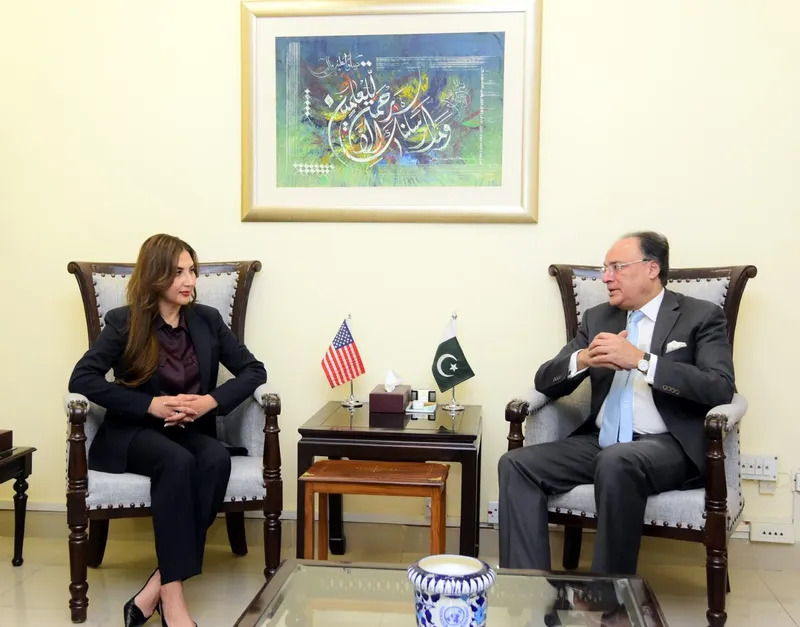
ISLAMABAD (special crosspondent) – Federal Minister for Finance and Revenue, Senator Muhammad Aurangzeb, held a high-level meeting today with the U.S. Chargé d’Affaires to Pakistan, H.E. Ms. Natalie Baker, at the Finance Division to explore avenues for deepening bilateral economic ties and fostering strategic investment. The discussions underscored the enduring partnership between the two nations, mirroring the global diplomatic dialogues often observed in the context of broader geopolitical and economic shifts.
Review of Washington Engagements
Minister Aurangzeb provided a comprehensive briefing on his recent diplomatic tour of Washington, where he engaged with the U.S. Secretary of the Treasury, the International Monetary Fund (IMF), the U.S. International Development Finance Corporation (DFC), and the U.S. Export-Import Bank (EXIM). The minister underscored the productivity of these meetings, noting that they have laid a foundation for enhanced financial collaboration and identified financing pathways for commercially viable infrastructure projects within Pakistan.
Trade Framework and Market Access
The dialogue also touched upon the Pakistan–U.S. reciprocal trade framework, building on recent consultations with the Office of the United States Trade Representative (USTR). Senator Aurangzeb highlighted that significant progress has been made in these negotiations, reiterating Islamabad’s commitment to a mutually beneficial framework that promotes expanded market access, strengthens export capacities, and facilitates robust bilateral trade growth.
Investment and Economic Reforms
Senator Aurangzeb elaborated on the Government’s strategic efforts to engage international capital markets and diversify financing streams. He highlighted the central administration’s focus on bolstering foreign exchange reserves, enhancing the sovereign credit profile, and utilizing long-term financing instruments to ensure sustainable economic stability. Furthermore, he noted that, similar to ongoing discussions regarding joint industrial and economic value chains elsewhere, there is significant potential for U.S. financial institutions to play a larger role in Pakistan’s investment landscape.
Emerging Sectors and Policy Stability
The two sides conducted an extensive exchange of views regarding potential collaborations in logistics, energy, telecommunications, digital technology, and artificial intelligence. The Finance Minister affirmed the government’s resolve to cultivate an environment conducive to private-sector investment. Addressing the global economic environment, Ms. Baker acknowledged Pakistan’s resilience in the face of rising energy prices and regional volatility. Minister Aurangzeb cited the newly implemented daily price revision mechanism for petroleum products as a key fiscal measure aimed at aligning domestic pricing with international market fluctuations. He concluded by reiterating the administration’s commitment to structural reforms, emphasizing that such stability is vital, especially when considering regional connectivity initiatives like efforts to seek new rail links and infrastructure corridors.