Gulf Nations Develop Strategic Pipelines to Bypass Strait of Hormuz
 By abdullah
Published: 25 Jul 2026
2 min read
By abdullah
Published: 25 Jul 2026
2 min read
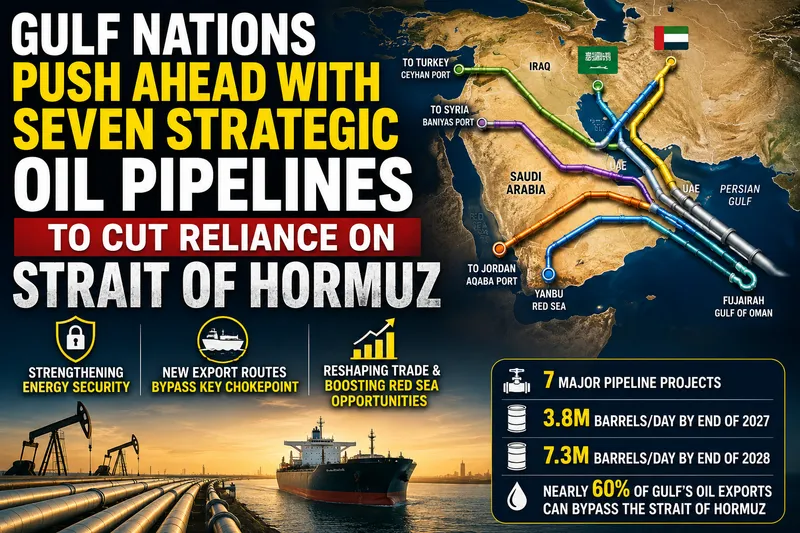
DUBAI (special crosspondent) – Gulf countries are rapidly advancing seven major oil pipeline projects aimed at reducing dependence on the Strait of Hormuz, as regional governments seek to protect energy exports from growing geopolitical risks and ensure uninterrupted supplies to global markets. This strategic infrastructure shift comes as diplomats like Ishaq Dar and Abbas Araghchi Reaffirm Commitment to Regional Stability to navigate the complex security landscape in the Middle East.
Expanding Export Capacity
The new pipeline network is expected to provide alternative export routes for millions of barrels of crude oil each day, significantly lowering the region’s reliance on one of the world’s most strategically sensitive maritime passages. The projects have gained urgency following recent security concerns that exposed the vulnerability of oil shipments through the Strait of Hormuz.
Industry estimates suggest the combined pipeline capacity could reach 3.8 million barrels per day by the end of 2027, increasing to 7.3 million barrels per day by late 2028. Once completed, the network could handle nearly 60 percent of the Gulf’s pre-conflict oil exports without requiring tankers to transit the Strait of Hormuz.
Strategic National Projects
Saudi Arabia is expanding its long-established East-West Pipeline, which connects oil fields in the Eastern Province with the Red Sea port of Yanbu, providing a secure overland route for exports. The United Arab Emirates is also investing heavily in expanding the Habshan-Fujairah pipeline, enabling larger volumes of crude to reach international markets directly through the Gulf of Oman while avoiding Hormuz altogether.
Iraq is simultaneously pursuing several strategic pipeline corridors linking its southern oil-producing regions to Turkey’s Ceyhan, Syria’s Baniyas, and Jordan’s Aqaba ports. These projects are intended to diversify export options and reduce the country’s dependence on Gulf shipping lanes.
Economic Implications and Future Outlook
Energy analysts believe the new infrastructure will enhance the strategic importance of Red Sea ports while creating fresh economic opportunities for countries along Africa’s eastern coastline. Increased oil traffic is expected to stimulate investment in ports, logistics services and supporting infrastructure across the region. Despite the benefits, experts caution that alternative routes cannot completely replace the Strait of Hormuz. Higher transportation costs, longer shipping distances to Asian markets, capacity constraints and ongoing security concerns in the Red Sea remain significant challenges. Nevertheless, Gulf producers increasingly view these pipelines as a long-term strategic necessity for protecting energy exports and maintaining global supply stability.