Ambassador Gilani Highlights SCO-OIC Traditional Medicine Cooperation
 By abdullah
Published: 22 Oct 2026
4 min read
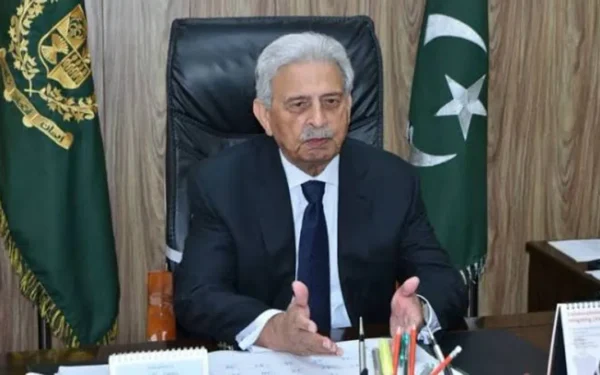
BEIJING (Special Correspondent) – Pakistani Ambassador to China, Dr. Syed Ali Asad Gilani, recently underscored Pakistan’s strong commitment to enhancing cooperation in traditional medicine with China and member states of the Shanghai Cooperation Organisation (SCO) and the Organization of Islamic Cooperation (OIC) at a key seminar in Beijing. He highlighted China’s advancements and Pakistan’s readiness to share its own rich traditional knowledge.
Key Points
- Ambassador Gilani praised China’s remarkable achievements across science, technology, industry, and healthcare sectors.
- The seminar extensively discussed traditional medicine markets, regulatory policies, research and development, and quality standards.
- More than 20 experts and over 100 representatives from seven countries attended the significant Beijing seminar.
- Pakistan has established two critical initiatives: the Sino-Pakistan Center for Traditional Chinese Medicine and the Pakistan-Zhejiang Joint Laboratory.
- Ambassador Gilani urged the translation of institutional arrangements into tangible outcomes through joint research and training programs.
The Ambassador delivered these remarks at the Seminar for Promoting Development of the Traditional Medicine Industry between the SCO Traditional Medicine Industry Alliance and the Organization of Islamic Cooperation Standing Committee on Scientific and Technological Cooperation (OIC-COMSTECH) in Beijing. This event, as reported by CEN on Thursday, focused on critical areas including traditional medicine markets in SCO and OIC member states, registration and regulatory policies, research and development, clinical evaluation, production and quality standards, and international cooperation and industrialization pathways.
The seminar saw the participation of more than 20 traditional medicine experts and scholars from China, Iran, Portugal, the United Arab Emirates, Pakistan, and Uzbekistan, alongside over 100 representatives from Chinese research institutes, Traditional Chinese Medicine (TCM) hospitals, and various enterprises.
The envoy observed that the forum convened at an opportune moment. He stated that as countries actively seek sustainable and accessible healthcare solutions, traditional medicine offers significant opportunities for research, innovation, industrial development, and international collaboration. He further elaborated that various traditional medicine systems, including traditional Chinese medicine, traditional Unani medicine, and traditional Arab medicine, are particularly pertinent to the ongoing discussions, showcasing the potential for integrating traditional knowledge with modern scientific research, advanced manufacturing, stringent quality-control systems, and broader international cooperation.
Pakistan’s Initiatives in Traditional Medicine Cooperation
Pakistan has taken concrete steps to promote cooperation with China in the field of traditional medicine, Ambassador Gilani underlined. He specifically cited two major initiatives: the establishment of the Sino-Pakistan Center for Traditional Chinese Medicine at the University of Karachi and the Pakistan-Zhejiang Joint Laboratory for Research and Development of Herbal Medicine at Ningbo University. According to the Ambassador, these platforms lay a robust foundation for collaborative efforts among universities, research institutions, hospitals, and pharmaceutical enterprises.
“We should now focus on translating these institutional arrangements into measurable outcomes through joint research, comprehensive training of doctors and researchers, academic exchanges, scientific evaluation of medicinal plants and herbal formulations, and the diligent development of quality-assured traditional medicine products,” Dr. Syed Ali Asad Gilani stated.
He concluded by affirming that Pakistan stands ready to work collaboratively with China, OIC-COMSTECH, the SCO Traditional Medicine Industry Alliance, and other participating countries to advance these proposals. He stressed that cooperation should extend beyond mere academic exchanges to encompass the entire traditional medicine value chain, ranging from initial research and cultivation to scientific validation, production, robust quality assurance, and responsible commercialization.
Frequently Asked Questions
What was the focus of the SCO-OIC traditional medicine seminar?
The seminar focused on market development, registration and regulatory policies, research and development, clinical evaluation, production and quality standards, and international cooperation for traditional medicine within SCO and OIC member states.
What initiatives has Pakistan taken to promote traditional medicine cooperation with China?
Pakistan has established the Sino-Pakistan Center for Traditional Chinese Medicine at the University of Karachi and the Pakistan-Zhejiang Joint Laboratory for Research and Development of Herbal Medicine at Ningbo University.
What outcomes does Ambassador Gilani seek from these collaborations?
Ambassador Gilani seeks measurable outcomes through joint research, training of doctors and researchers, academic exchanges, scientific evaluation of medicinal plants, and the development of quality-assured traditional medicine products.