Australian High Commissioner Emphasizes Strengthening Trade Ties with Pakistan
 By abdullah
Published: 27 Aug 2026
2 min read
By abdullah
Published: 27 Aug 2026
2 min read
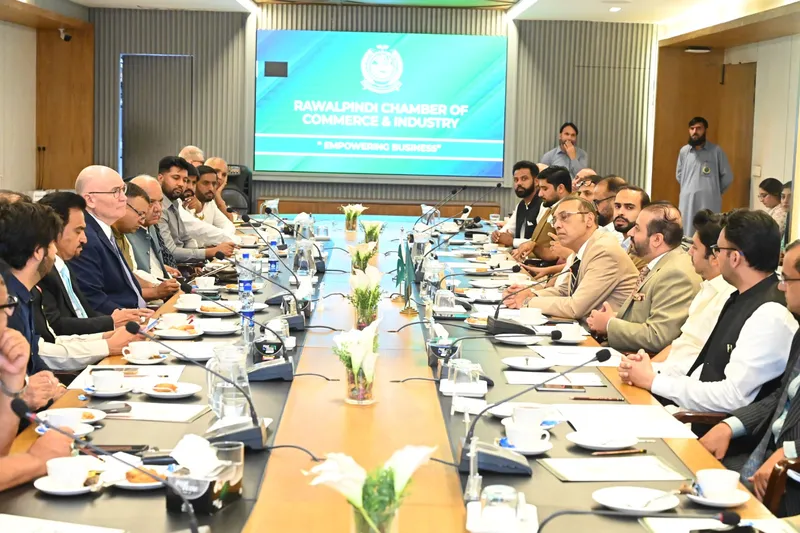
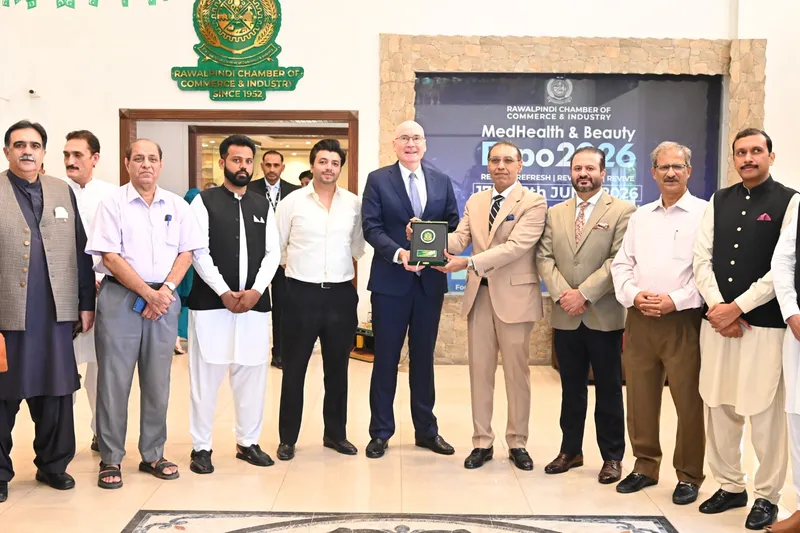
RAWALPINDI (special crosspondent) – Australian High Commissioner to Pakistan H.E. Timothy Kane recently conducted an official visit to the Rawalpindi Chamber of Commerce and Industry (RCCI) to explore new avenues for bilateral cooperation. During the visit, he was warmly welcomed by RCCI President Usman Shaukat, Vice President Fahad Barlas, and Director of Trade & Education, Azhar Shah.
Expanding Bilateral Economic Cooperation
President Usman Shaukat provided a comprehensive briefing to the High Commissioner regarding the Chamber’s ongoing initiatives and upcoming events focused on fostering robust trade, investment, and business linkages. The discussion identified several key sectors ripe for enhanced Pakistan–Australia collaboration, specifically focusing on pharmaceuticals, information technology, gems and mining, agriculture, livestock, education, and vocational training. Such international investment interests underscore the growing confidence of foreign stakeholders in Pakistan’s emerging market potential.
Deepening Strategic Partnerships
Addressing the gathering, H.E. Timothy Kane highlighted the enduring nature of people-to-people ties between the two nations. He emphasized that future strategic cooperation should prioritize critical areas including food security, water management, and climate resilience, sectors where Australian expertise could prove invaluable to Pakistan’s development trajectory. These discussions follow broader regional dialogues, such as those seen when parliamentary leaders advocate for peace and stability through collaborative frameworks.
Education and Agricultural Ties
The High Commissioner noted with satisfaction that Australia currently hosts over 22,000 active Pakistani students, a figure that serves as a testament to the strong educational links between the two countries. Furthermore, he reflected on the success of more than four decades of agricultural collaboration, which remains a cornerstone of the bilateral relationship. Strengthening such ties is essential for regional progress, much like efforts in other sectors where parliamentary unity helps address global challenges effectively.