Chairman Senate Calls for Enhanced Pakistan–South Korea Technological Cooperation
 By abdullah
Published: 30 Jul 2026
3 min read
By abdullah
Published: 30 Jul 2026
3 min read

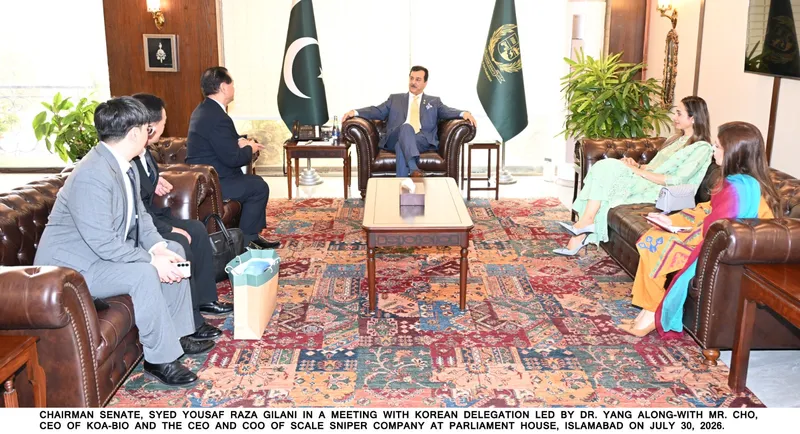
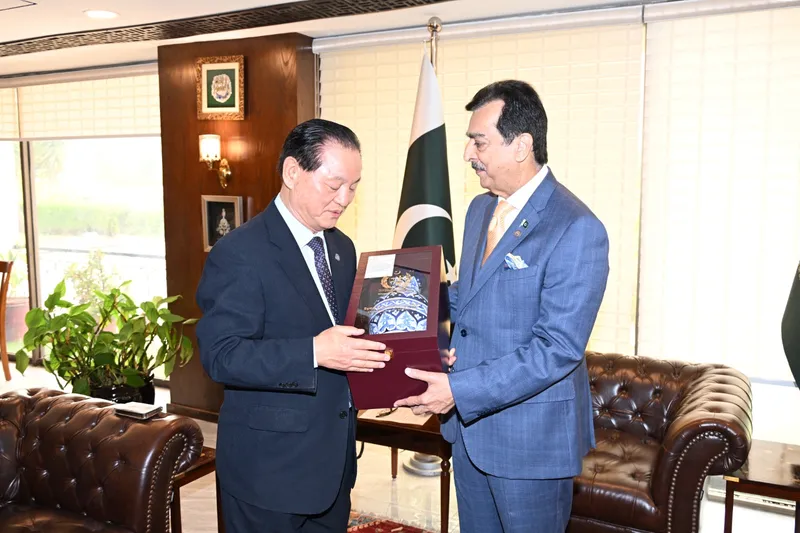
ISLAMABAD (special crosspondent) – Chairman Senate of Pakistan, Syed Yousaf Raza Gilani, held a high-level meeting with a visiting delegation from the Republic of Korea, led by Mr. Cho, Chief Executive Officer of KOA-Bio. The delegation included senior representatives from KOA Corporation, Scale Sniper, and other prominent South Korean firms specializing in biotechnology, artificial intelligence, healthcare innovation, and advanced medical technologies. Welcoming the distinguished delegation, Chairman Senate Syed Yousaf Raza Gilani stated that Pakistan attaches great importance to its longstanding friendship with the Republic of Korea, a relationship founded on mutual respect, trust, and expanding economic and technological cooperation. He noted that bilateral relations have seen remarkable progress over the past four decades, with collaborations strengthening across trade, investment, technology, education, and people-to-people exchanges. While acknowledging that bilateral trade has grown significantly, the Chairman emphasized that considerable untapped potential remains in high-value sectors, including biotechnology, pharmaceuticals, healthcare, AI-enabled medical research, advanced manufacturing, and information technology. Highlighting the importance of parliamentary diplomacy, Syed Yousaf Raza Gilani remarked that the Pakistan–South Korea Parliamentary Friendship Group serves as a vital institutional platform for legislative cooperation and deeper engagement between the two nations. He expressed hope that increased exchanges among parliamentarians, policymakers, researchers, and the private sector would further bolster scientific and economic ties. The Chairman underscored Pakistan’s commitment to research and innovation, noting that the country possesses a growing network of universities, medical institutions, and a talented pool of young scientists capable of supporting international collaboration. He encouraged the development of long-term partnerships in biologics, precision medicine, and medical devices, including joint research programs and clinical studies focused on addressing multidrug-resistant bacterial infections. Reflecting on the transformative impact of AI in healthcare, Chairman Senate stated that Pakistan is keen to collaborate with South Korean institutions on AI-assisted drug discovery, bioinformatics, genomic analytics, and digital diagnostics. He invited South Korean companies to explore investment opportunities in medical device manufacturing, technology transfer, and laboratory modernization, noting that Pakistan’s improving investment climate is supported by the Special Investment Facilitation Council (SIFC), which has introduced a streamlined single-window mechanism for strategic investors. The Chairman encouraged robust business-to-business partnerships and joint ventures between South Korean entities and Pakistani stakeholders, including ministries and research institutions. The South Korean delegation expressed gratitude for the reception and conveyed a strong interest in deepening cooperation across the proposed sectors, specifically praising Pakistan’s growing scientific capabilities and investor-friendly environment. As the region continues to address complex challenges, the Chairman emphasized that forums such as the Inter-Parliamentary Speakers’ Conference are essential for advancing policy frameworks that support global health security and artificial intelligence governance. This engagement mirrors Pakistan’s broader diplomatic outreach, such as recent efforts to partner on green economy initiatives, while also focusing on regional stability and crisis management.