Strait of Hormuz Congestion Risks Global Marine Ecosystem Bioinvasion Crisis
 By abdullah
Published: 25 Jul 2026
2 min read
By abdullah
Published: 25 Jul 2026
2 min read
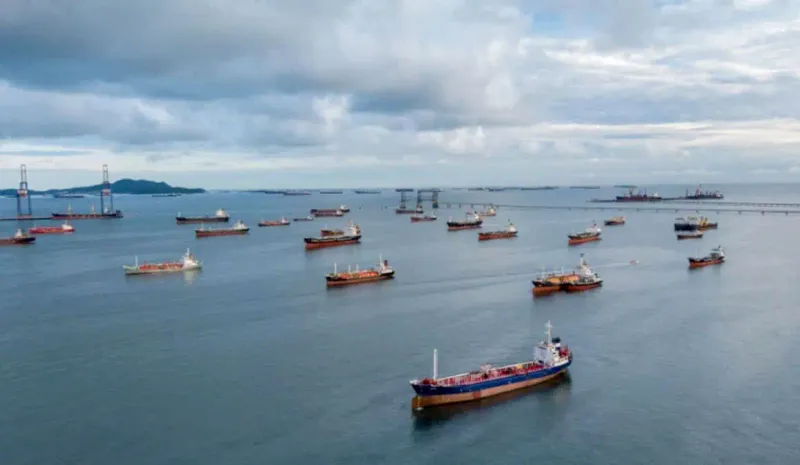
WASHINGTON (special crosspondent) – Thousands of commercial vessels and oil tankers currently idling near the Strait of Hormuz for months could precipitate a global environmental crisis by facilitating the spread of invasive marine species to international ports, according to a recent scientific study. As Gulf nations develop strategic pipelines to bypass the Strait of Hormuz, the stagnation of maritime traffic has inadvertently created a massive ecological hazard.
The research, conducted by the University of Maryland Center for Environmental Science (UMCES) and published in the journal Biological Invasions, highlights how prolonged anchoring in the Persian Gulf provides optimal conditions for marine organisms to accumulate on ship hulls. Current data indicates that more than 1,500 commercial vessels are anchored in the region, with hundreds more stationed in the Gulf of Oman due to persistent transit disruptions.
The Mechanism of Bioinvasion
Marine biologists explain that when ships remain stationary for extended periods, their submerged hulls serve as habitats for algae, barnacles, mussels, molluscs, and various other organisms. Upon the resumption of normal maritime trade, these vessels transport the accumulated biota to distant coastlines, where they risk establishing themselves as invasive species. Such displacement frequently results in the destabilization of local marine ecosystems, threatening native fish populations and critical regional fisheries.
Long-Term Ecological Consequences
Researchers have classified the ongoing congestion as a potential “bioinvasion super-spreader event.” The unprecedented scale of the vessel buildup threatens to impose significant economic burdens on port authorities and coastal infrastructures, as invasive species are often notoriously difficult to eradicate once they gain a foothold in new environments. Experts have urged international shipping entities and governments to implement more rigorous biofouling management protocols and enhance hull inspection mandates.
The findings emphasize that the instability in the region is not merely a matter of energy and economic security; it represents an emerging environmental challenge requiring urgent, coordinated action to mitigate lasting impacts on global marine biodiversity.