United States Imposes New Import Tariffs on Sixty Trading Partners
 By abdullah
Published: 24 Jul 2026
2 min read
By abdullah
Published: 24 Jul 2026
2 min read
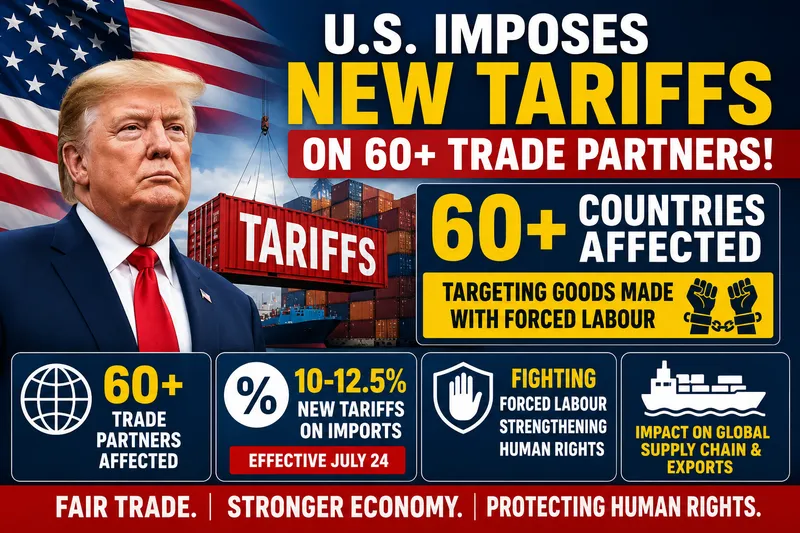
WASHINGTON (special crosspondent) – The United States has significantly expanded its trade measures by imposing new import tariffs on more than 60 trading partner countries, marking one of the most extensive protectionist actions initiated by the Trump administration. This policy initiative is primarily designed to block the entry of goods allegedly produced through forced labour, while concurrently seeking to protect domestic industries and enhance national supply chain security.
New Tariff Measures and Scope
According to reports, the new tariffs, ranging between 10% and 12.5%, officially came into effect on July 24. These measures target a vast array of imported products from nations that, according to U.S. federal authorities, have failed to implement sufficient safeguards to eradicate forced labour from their industrial supply chains. The White House maintains that this policy is central to its broader National Action Plan on Human Rights, aiming to uphold ethical labour standards, promote fair global trade, and systematically reduce dependence on imports from countries accused of exploitative labour practices.
Affected Nations and Strategic Exemptions
The scope of these tariffs is expansive, affecting major trading partners including China, the European Union, India, Canada, Mexico, Japan, South Korea, Brazil, Vietnam, Thailand, Malaysia, Indonesia, Turkey, the United Kingdom, and Australia. Despite the broad nature of the policy, U.S. officials have confirmed that certain strategic imports—specifically crude oil, natural gas, selected minerals, fertilizers, steel, and aluminium—have been granted temporary exemptions to prevent critical disruptions in domestic manufacturing and energy sectors.
Global Reaction and Economic Implications
The announcement has sparked widespread concern among international stakeholders. Beijing, Brussels, and various other capital cities have voiced objections, warning that such unilateral actions threaten the integrity of the multilateral global trading system and may violate established principles of the World Trade Organization (WTO). Some governments have already signalled intentions to initiate legal challenges or implement retaliatory measures. Trade analysts observe that the move could increase production costs and potentially trigger further high-level economic instability. As the administration continues to prioritize national innovation and industrial sovereignty, economists warn that these tariffs may slow international commerce, disrupt logistics, and place significant upward pressure on consumer prices worldwide.