Trump Ends Interim Iran Peace Accord Amidst New Strikes
 By abdullah
Published: 08 Jul 2026
2 min read
By abdullah
Published: 08 Jul 2026
2 min read
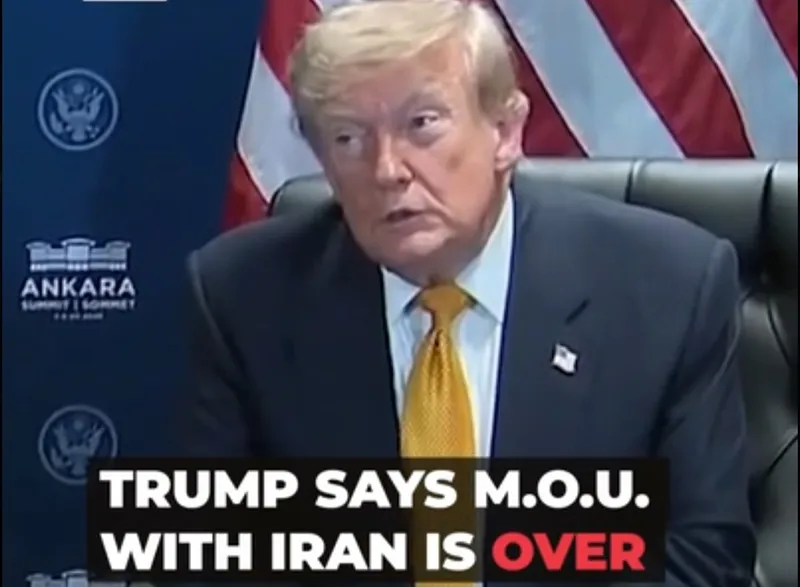
ANKARA (special crosspondent) – U.S. President Donald Trump has announced that the interim arrangement aimed at ending hostilities with Iran is no longer in effect. He stated that indirect talks held in Qatar concluded without tangible progress, prompting Washington to launch renewed strikes against Iranian targets. Furthermore, the administration has revoked a special waiver that previously permitted certain transactions related to Iranian oil sales.
Speaking on the sidelines of the NATO summit, President Trump delivered a sharp critique of Iran’s leadership, asserting that further negotiations would prove unproductive given the current circumstances. This development follows recent attacks on commercial shipping in the Strait of Hormuz, which have escalated regional tensions and further jeopardised the already fragile understanding between the two nations. The move signals a hardening of the U.S. stance and potentially complicates efforts to de-escalate the ongoing conflict. The revocation of the oil waiver is expected to exert further economic pressure on Iran.
Strained Negotiations
The indirect talks, which were facilitated in Qatar, were intended to establish a temporary ceasefire and pave the way for broader diplomatic engagement. However, sources familiar with the negotiations indicated significant disagreements over key issues, leading to their collapse. The failure of these talks has cast a shadow over diplomatic efforts to manage the escalating tensions in the region. The U.S. has consistently accused Iran of destabilising activities in the Middle East, including support for various militant groups. Iran, in turn, accuses the U.S. and its allies of interference.
Regional Tensions Escalate
The attacks on oil tankers in the Strait of Hormuz, a vital waterway for global oil transport, have been a major point of contention. The United States has attributed these attacks to Iran, a charge that Tehran has vehemently denied. The heightened tensions have led to increased military presence in the region by both the U.S. and its allies, raising concerns about the potential for a wider conflict. The Saudi Crown Prince has previously rejected Trump’s Iran war strategy, indicating differing approaches among regional players. The U.S. administration’s decision to end the interim accord and impose further sanctions marks a significant escalation in the ongoing diplomatic standoff.